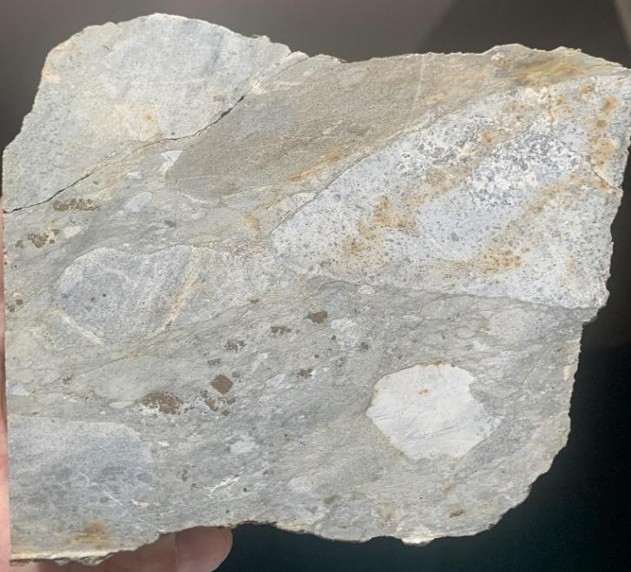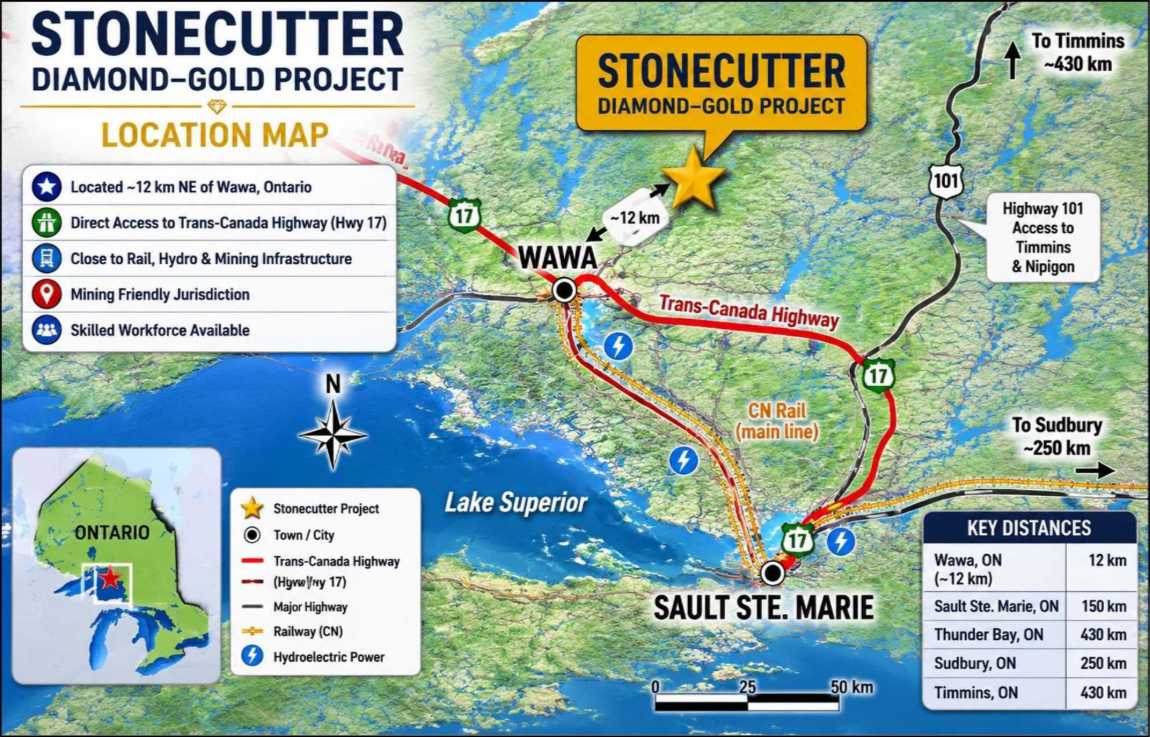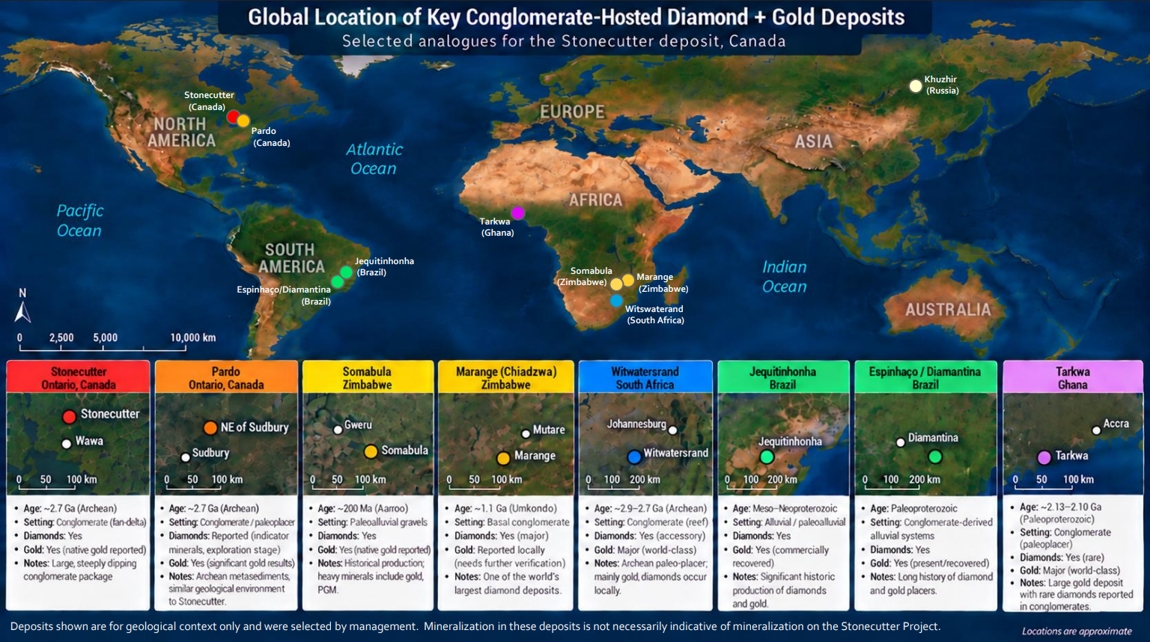
In addition to its demonstrated diamond potential, the Stonecutter Project hosts significant gold exploration upside that remains largely underexplored. Grab samples of conglomeratic rock, taken during the mini-bulk program conducted by previous operators and submitted to Accurassay Laboratories Ltd. in Thunder Bay in 2007 returned positive indications for gold mineralization. It was noted that the S1C conglomerate which produced the highest diamond grades also showed higher gold results from the limited sampling that was conducted. The following table produced by the previous operator Dianor provides a summary of these gold and diamond results.
SUMMARY OF GOLD ASSAY RESULTS OF GRAB SAMPLES TAKEN DURING THE MINI-BULK SAMPLING PROCESSING IN 2007 COMPARED TO THE REPORTED DIAMOND GRADES OF THE SAMPLES THAT WERE PROCESSED.
| Conglomerate Unit |
Mini-Bulk Sa. # | # Samples | Average Grade gm Au/t1 |
Average Diamond Grade (cpht)2 |
|---|---|---|---|---|
| S1C | 136 | 22 | 0.046 | 37.7 |
| S1C | 401 | 26 | 0.56 | 42.5 |
| S1CV | 101 | 29 | 0.012 | 26.9 |
| S1CO | 184 | 11 | 0.012 | 11.7 |
1Average assay result from grab samples of both head feed and recrushed material from mini-bulk samples.
2Reported recovered grade from mini-bulk samples based of a 0.85mm bottom screen.
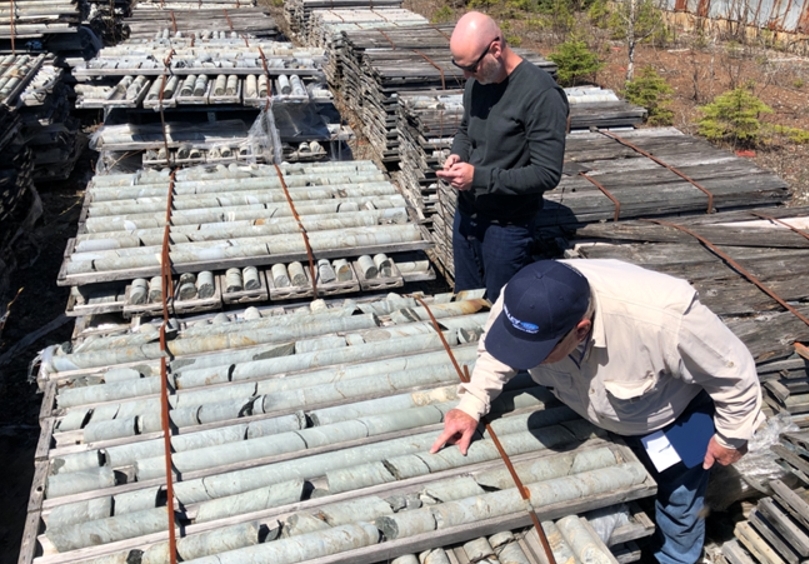
The proposed a work program will focus on the evaluation of the gold potential of the S1C conglomerate unit on the Stonecutter Project. Approximately 47,500 metres of drill core samples, from 158 drill holes are available for sampling and gold analyses. This drill core has been stored at a warehouse in the town of Wawa. The proposed work will include:
Tres-Or intends to prioritize the evaluation of the Stonecutter Project's gold potential through focused exploration to determine the scale, continuity, and economic significance of the gold mineralization, which could represent a transformational value driver for the project.